The year is 2026, which means we’re over a quarter way through the 1st century of the 3rd millenium AD…what a time to be alive! 😯 This podcast is a reminder of all the great things we get to live for in this life, in case anyone needs a bit of a boost to start the year strong 💪 Listen in for some ideas on living more meaningfully and enjoyably this year, and in this lifetime too ❤️
The following speech was written in 2018 for a university business student competition — we’ll let the robots judge whether it aged well 😉
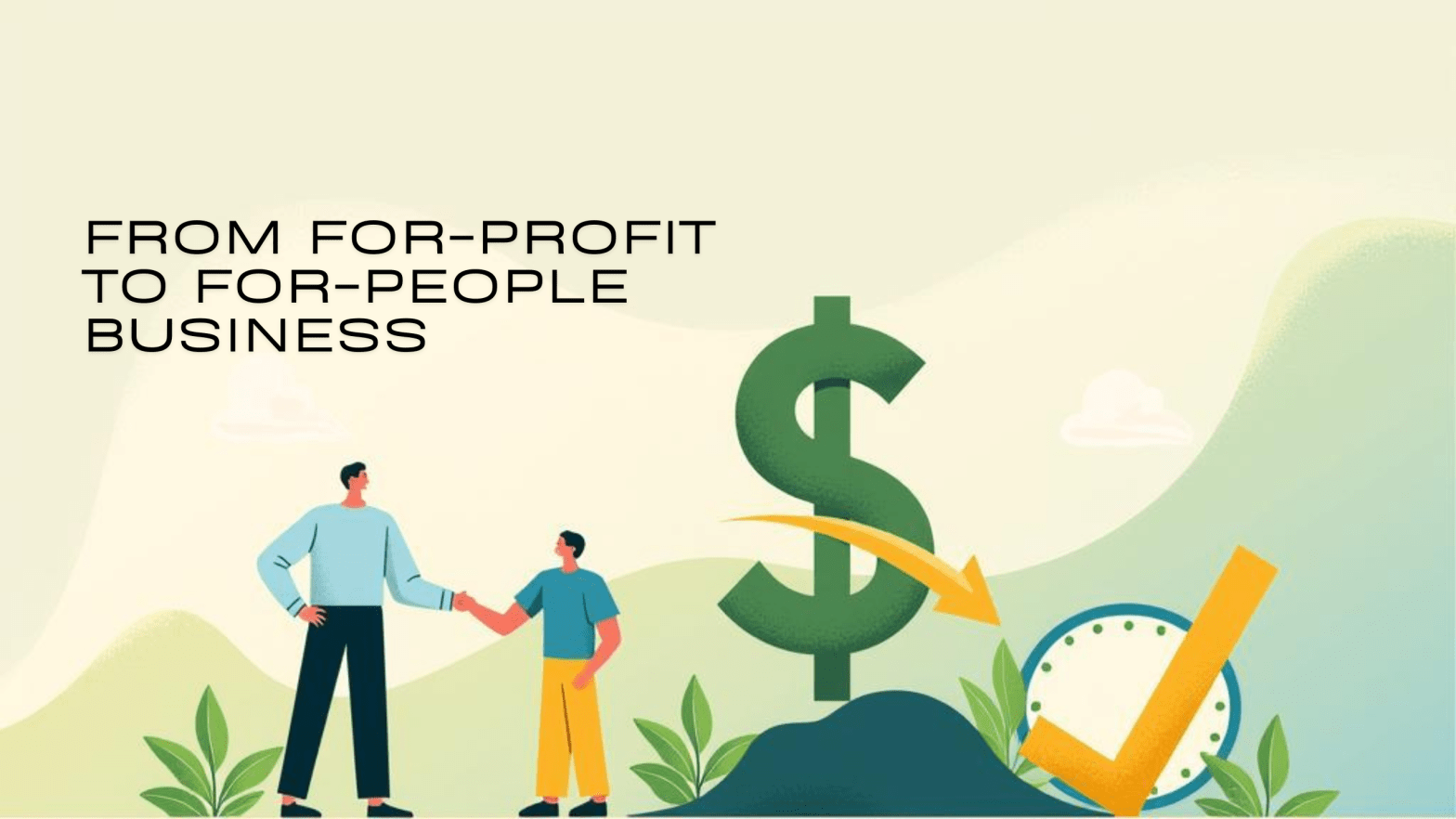
Today I’ve been given the topic of making the world a better place, my vision of how business will change the future. However, before I start, I want to set the mood. I feel like the entire idea of focusing on how businesses can change things is already a step in the wrong direction. I think we can go bigger than that. We need to focus on how people can change things instead. Why? Because when we talk about what business can do, we immediately separate our own personal responsibility for making a positive impact. That somehow, if we make a questionable decision in the name of business we can just come home and donate to a charity that solves a problem that was probably caused by a decision made by someone else in the name of business.
To make real meaningful change, we need to focus on the people, and those of us in business need to be leading the charge. A business is made up of people. These people work together and are connected to the world through networks amplified by technology. This gives businesses power to make an impact greater than its immediate reach, and the most powerful tool we can use is culture. Over the years, I’ve seen for myself how a great organisational culture can attract people and change long-held perceptions. If business leaders can build their culture and empower people to become truly passionate about creating positive impact, then we would make a massive stride towards changing the world.
The first step to solving many problems is to simply change the language we use. If I asked you what a banana was, would you ever respond with “oh that’s just a not-apple”. No, you’d say it’s a banana. So why don’t we call not-for-profits for-people organisations instead? Sometimes we just gotta take a step back. Evaluate the true purpose of business in the first place. Profits. But what’s that for? It’s for people. If we can unite businesses, charities and even social enterprises to become human-focused enterprises instead, then the whole game changes. Then there’s a big shift in perception. Imagine what that could do and how it would drive people to act differently?
If I were to ever start my own business, I’d want to take payment in smiles instead of money. Because currencies differ between countries, but a smile is universal, right? Practically it would be kind of hard to do though. So it seems as though I’ll never start something. Unless some genius invents some super-advanced AI technology which uses facial recognition to capture peoples’ emotions and convert it into digital currency on the blockchain. Phew! Where am I going with this?
Technology is changing the world. Many jobs we see today will not exist in 5, 10, 20 years’ time. The fourth industrial revolution could wipe out entire industries. Processes are already being automated in government, business and even our university clubs. When the same tasks traditionally performed by humans can no longer sustainability generate profits, we need to turn our energy into activities which generate value for people. Automation can only take us so far, it’s up to us how we enhance our lives with the technology that gives us the power and freedom to do so much. Robots are already better than humans in so many aspects, but they will never be better at caring and empathising with other humans. Real change will be driven by people. People with the passion, creativity and grit needed to use technology as a tool to improve human lives.
This is precisely why people in government, education and especially business need to take on a greater role in empowering everyone to have access to technology. Not only that, we need to help people understand what different types of technology are and how they fundamentally work. Because technology will be what shapes the most part of peoples’ lives in future, and we can’t let it become a method of division. The more we combine understanding of technology with understanding of different cultural perspectives, the better we can create solutions that change peoples’ lives for the better.
I’ll finish with a quote from the movie Peter Pan. “The moment you doubt whether you can fly, you cease forever to be able to do it.” If every person in business believes in a people-focused mindset, then I have a feeling we’re all gonna fly into a very bright future indeed…
At the end of the actual speech, the paper was transformed into a paper plane and thrown into the audience!
Also, read the speech again and imagine it written in Comic Sans this time round — trust me, it’ll be even better 🙂
Did you grow up always hearing things like: “Why can’t you just be like [insert X kid’s name] and grind harder/look prettier/make more TikToks??” 🙎♀️🙎♂️ If so, you’re definitely not alone and unfortunately, the comparison trap NEVER stops 😩 Listen in to this CwD episode where we unpack the causes and solutions to this age-old problem so that we can all inspire, support each other, and thrive together! 🤝🙌👏
Are you feeling stressed out more often than not? 😓 Adulting is hard, and without the right coping mechanisms it can be even more difficult 😪 That’s why this episode of CwD is here to help you feel more relaxed, chilled, hopeful, and armed with strategies to overcome all forms of stress in your life! 😎🏝️💆♀️
Are you considering taking a gap year or career break but don’t know what may be on the other side of your decision? Fear NOT, because CwD has got you covered with this EXCLUSIVE episode on all things related to #funemployment 🤪 Whether it’s travel ✈️, side hustles 💡, or quality time with loved ones, you’ll surely have a reason for the season and this podcast will provide the practical inspiration for your journey!
Make sure to read the Time Value of Memories article mentioned in this podcast, you won’t regret it! 😉
From partying 🍾 to podcasts 🎙️, raving 🤘 to running 🏃, studying 📚 to slaving 🙇 (whilst getting ✨ paid ✨ ofc)…what defines our early 20s compared to our late 20s? Join the CwD gang as we unpack this momentous decade in the context of our lives! What did we learn, achieve, and regret during our 20s…plus what do we think about our upcoming 30s?
Do you ever feel like you’re the ONLY person like yourself sometimes, or the only one going a certain direction in life? Whatever your goals are, it’s important that you’re surrounded by the right kind of likeminded people 🫵 Don’t miss this CwD episode about finding your tribe, community, friends, or whatever you like to call it! 🤪
Do you ever feel that you’re not meeting new people or making new friends anymore? Well my friend, you’re not alone! Join us as two old friends chat about creating new friendships, whether it’s during our studies or in our young professional eras ✨
Investing is an area many people are curious about. It provides an opportunity to boost saving goals for important things in the future such as a first home. If it is within your means, there’s no better time to start investing than now. This is a beginner guide for those wanting to delve into the world of investing.
It’s the year 2024.
You’ve got some hard-earned cash stashed away in your bank’s online savings account, earning 2% interest. Inflation is hitting a rampant 4-6%, meaning your savings are barely keeping up with the increasing grocery prices. We’re not even mentioning the soaring brunch prices yet!
You are part of a generation with a severe lack of purchasing power.
There is a more rewarding solution to this problem. But it does come with a bit of life evaluation and potentially more risk.
Investing in shares and other financial instruments can boost your saving goals dramatically, and this article aims to help you get started. Because even if you’ve been thinking about doing this for a long time already, sometimes the hardest part is to simply take that first step.
Now the first and most important thing is to NEVER invest any amount you can’t afford to lose. Investing is a privilege, and if you can look after your day-to-day financial needs whilst having some spare money to make calculated risks on, you’re good to go! 🙂
The main steps to investing are:
Choose an investment platform
Select investments to buy
Track and manage progress
Sell your investments at the right time
1. Which Investment Platform?
The most important tool you’ll need for investing is the platform you invest with. This is what you use to buy and sell shares, manage your portfolio, and review the progress of your investments. There are many factors to consider when choosing an investment platform, so I will outline three key factors that are important in your decision.
Usability
Do you enjoy using apps to do all your financial admin? Or would you rather have a nice sleek web-based platform to run the numbers on for all your spreadsheets?
The usability aspect of an investment platform is crucial as it dictates how you interact with your investments. Many platforms will have very beautiful graphics and statistics to help investors track how their investments are going. These are especially great if you are early on in your investing journey. Having a good app also makes buying and selling shares on the fly much easier and quicker.
On the other hand, other investment platforms may be more focused on providing a lot of insightful market data. These are great for those who understand investing fundamentals well and prefer doing their own analysis.
Cost
The cost of using an investment platform and trading shares is a key consideration for an investor. It ties closely with what your preferred investment strategy will be.
Many platforms charge you a fixed or minimum fee for buying and selling shares up to a certain value. Depending on how much this is, it could influence your investment decisions greatly. If the fee is high, you might want to consider purchasing larger amounts of shares and holding for many years. If the fee is low, it lends well to those who want to trade shares regularly based on share price fluctuations. Platforms often charge percentage fees when you trade shares valued above a certain amount too, so it’s worth knowing what these are.
Other potential costs include regular subscription fees to an investment platform’s service. You will have to weigh up whether you’ll be using it enough to justify the ongoing costs. If you won’t be super active on the platform, it might be worth using one that doesn’t charge subscription fees.
Selection
Do you like investing in foreign shares or do you prefer sticking to local companies? Are you planning to invest in ETFs and other financial instruments or will you mainly invest in shares?
These questions could affect which investment platform is best for you. Some platforms are focused towards investing in overseas markets, whereas others might have a lot of information and support for the local sharemarket. You don’t want to limit yourself with the wrong investment platform if you plan on investing in a wide range of geographies.
At the same time, it’s also wise to choose a platform that focuses on the types of investments that matter to you. Sure, it might be nice to trade in gold commodities and futures every once in a while, but if you have no idea what I’m talking about right now then why add to the confusion! Sometimes, the best thing to do is to just keep it simple – investing is no exception. Only go for the advanced options if you need to. So if you want to stick to shares or ETFs, don’t accidentally get caught up on the crypto hype! #stonks 📈📉
The Verdict
There really is no outright best investment platform and the choice comes down to your individual circumstances and investment strategy. Keep in mind that your options for investment platforms will be heavily influenced by the country you live in and the currency you invest with. If all else fails, remember the age-old, tried and trusted advice for choosing investment platforms: “Why not both??” 🤷♂️
2. Which Shares?
There is never a one-size-fits-all solution for which shares you should select for your portfolio, and it all depends on your investment strategy. If you’re looking for consistent returns it could be worth looking closely at the utilities/electricity industry. A company working with new technologies could be the next big thing and make massive share price gains but could also end up suffering a massive setback. These are just some examples of the various possibilities of investing.
Research, Research, Research!
Do your research on the companies you’re considering. Look at the investor section of their websites for past annual reports, long-term business strategy and future financial projections. Search up the latest news articles about the company. Examine historical share price charts and find out key figures such as dividend yields. These steps will help you build confidence in the companies you might invest in and detect any red flags to avoid.
Have Fun!
Remember, this is the fun part! You don’t want to drown yourself reading through 200 pages of legal documents when researching but you don’t want to make investing decisions based off a hunch from your friend’s cousin’s stepdad either. Many of the companies listed across the world’s stock exchanges are recognisable brands from everyday life. Is there a company you are a die-hard customer of? It could be time to put your money where your mouth is – after a reasonable amount of research, of course. 🙂
Shortlist
Whatever you find, it could be helpful to come up with a shortlist of a few companies you think have potential. Once you’ve narrowed things down, make a direct comparison between them to decide on the most promising candidates. You could also follow their price movements closely for a while longer to understand how the shares trade. Finally, decide on one or more shares to buy while also taking into account the fees you’ll get charged for each transaction.
3. How to Keep Track?
Your chosen investment platform will have a range of tools to help you understand how your investments are progressing. You’ll have the ability to see the total value of your portfolio and the value of individual investments you own. It’s a good idea to check this regularly, but not too much that it drives you crazy. Keep an eye on the news about companies you have shares in. If there’s any important information that comes out, you may have to re-evaluate your position and act quickly.
Companies generally pay two dividends a year, an interim and a final dividend. This is the good stuff you’ve been waiting for! You can either take the cash earnings and reward yourself, or reinvest the dividends into more shares. Reinvesting dividends is a great way to utilise the power of compounding over time which can magnify your earnings.
Tax and Imputation
This is a very important area to understand generally as it has many implications for your share investments.
You may notice imputation (or franking) credits being attached to the dividends you receive. These will reduce the tax you’re liable for, as the company has already paid tax and this avoids double taxation. So make sure to keep track of these for your tax records at tax year’s end, as it could result in a nice cash boost! If you are on a lower income tax rate than the company tax rate, it may be possible to claim back a greater amount when your tax return is done.
Now I’m definitely not an expert on tax, so make sure to consult a professional tax advisor if you need proper advice!
4. When to Sell?
This will either be the saddest or most rewarding part of the whole investing process. Sometimes, there’s no other option than to cut your losses when your shares have been consistently falling in price. On the other hand, you may find that your shares have doubled or even tripled their price in five years’ time, which is the dream for any investor!
Be Sensible
It helps to be sensible when making decisions on when to sell your shares. Do not panic at every negative article about a company or succumb to every sharemarket doomsday prediction in the media, because people make these predictions seemingly every year. Unfortunately sharemarket crashes do happen, as shown by the Covid-19 induced economic impacts. It’s a classic example of a sudden and unforeseen event. The key takeaway is that when things seem to be going unbelievably well, there’s almost always a bad event right around the corner. So don’t be greedy, and cash out when you’ve made a reasonable amount of gains. Waiting till the last moment before the sharemarket crashes is very risky, and by the time you push the sell button it could be too late. It is possible, but incredibly hard to time the market perfectly.
Be Self Aware
Another important thing is to be aware of your own behavioural tendencies around investing. We are all human. We all have emotions. As much as we try to make our best investment decisions based solely on cold facts and evidence, there’ll always be some emotional element clouding our most rational self. There is a much researched area in behavioural economics called loss aversion theory. It states that humans have a tendency to feel the negative impact of losses much more than the positive impact from gains of the same size. So don’t beat yourself up if things don’t go as great as you expected, because even the best investors have bad days. We’re all human at the end of the day, after all! 🙂 (Unless this article is being read/trained on by AI 👀)
Invest in Your Life
Sometimes, you will have to make selling decisions based on the other things going on in your life. Need a new car? 🚗 Buying your first home? 🏠 Liquidating all your assets to travel the world? ✈️🌏😱 These are all valid reasons to sell and it’s important to remember that investing is a tool for enhancing the other aspects of your life. Only in the most extreme cases will it become your life itself. If you’re lucky, you may even hold onto the same shares you bought as a student all the way till your retirement. With that, I’d like to officially start the…
#InvestUntilRetirementChallenge
Buy some shares, and hold onto them until you retire. Even if it’s just one singular share you own in the end, it’s the thought that counts. Trust me, an investment made when you’re 21 is gonna age much better than a TikTok made at 21! 😳
Useful Resources
Here are a few websites that can be super useful for beginner investors:
This is literally the encyclopaedia and dictionary of everything finance and investment related. Its videos are also incredibly helpful for understanding complex financial concepts. If there’s any fancy words I’ve used in this article that you don’t understand, best bet is you’ll find it explained on Investopedia.
There aren’t many websites that are dedicated to investing in New Zealand but this one should be all you need. It’s got lots of guides and articles about different areas of investing, as well as some handy spreadsheet tools.
Useful Concepts
Investing is something that anyone can get started with. However, it’s a very tough thing to master. You don’t need a finance degree to become good at it but being armed with some basic financial knowledge can certainly help. This article is not a finance course, so I can only leave a few pointers for extra reading. Homework if you will. So go ahead and click on these links to get the proper definitions and explanations on Investopedia – they will help a lot if you are just beginning to learn about investing. 🙂
Diversification – the financial equivalent of not putting all your eggs in one basket, or investing in multiple companies so when things go wrong with one stock the others will keep things going strong overall
Business Cycle – the economy and share prices gradually grow over time before dipping and then restarting the cycle, which tends to repeat roughly every ten years
Risk vs. Return – shares which have the potential for a lot of gain can also cause more losses if things go wrong with the company, while there will be a limit to how much you gain from safer investments
Dividend Stock – these types of shares are usually in well-established companies that focus on paying consistent dividends at a good rate of return for investors
Growth Stock – these types of shares are expected to grow rapidly in price every year and pay little or no dividends, as the company invests in itself to grow further
Exchange Traded Fund (ETF) – these investments are essentially a ‘basket’ of multiple shares, which often cover entire markets, industries or countries
Mutual/Managed Fund – these investments put money from many people together to invest in a collection of assets, which is managed by professional fund managers who deduct some fees. Most superannuation funds are an example of these!
Are You Ready To Begin Investing Now?
Hopefully after reading this article you will have become a bit more confident about delving into the dark arts of the investing world. It’s honestly not as scary as you think once you’re in it.
So the next time you’re about to splash out on that avo’ on toast, maybe you could think about feeding your new investment fund as well as your belly! 🙂
Got your own investing tips to share? Leave a comment down below and help other budding investors make bank!
Note: Any information provided in this article is intended to be for general purposes only and should not be considered personalised financial advice or recommendations in any way. You should always make decisions based on your personal financial situation and fully assess the relevant risks of any investments.
Are you new to the raving scene or are you a seasoned festivalgoer? No matter what you identify as, this CwD episode is bound to bring you so much inspo for your next big concert! Join us as we dive into Asian rave culture around the world, and share the greatest concerting tips you’ll ever hear 🔥













 Chillin’ with Dylan